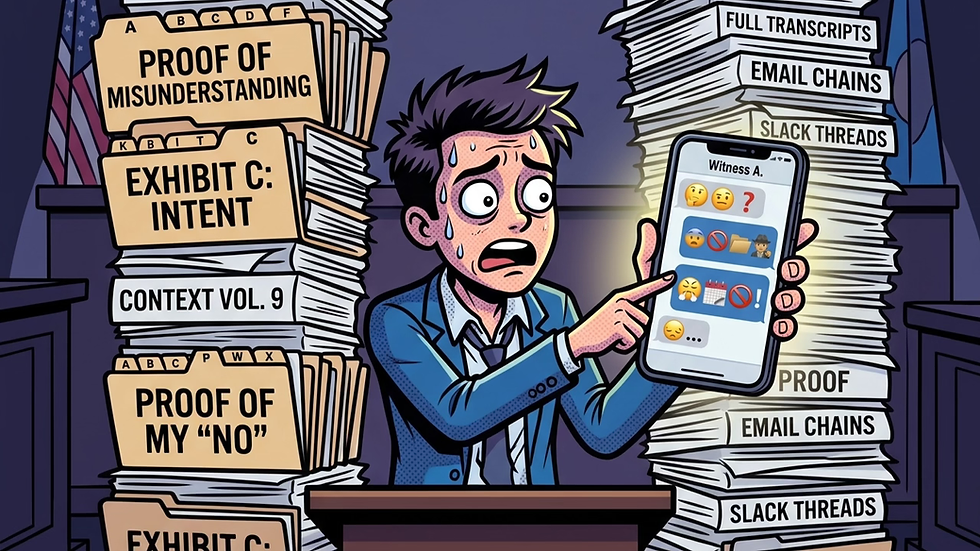
Burnout: The Burden of Exhaustion


Burnout convinces you to maintain perfect corporate posture while your immediate surroundings are actively catching fire. The system expects polite compliance even when you are actively turning to ash. Stop trying to aggressively optimize a nervous system that is currently on fire. Stand up and walk out of the flames.
"You do not have a motivation problem. You're a charred matchstick sitting in a burning room, politely criticizing yourself for not typing faster."
Episode Chapters
00:00 | Is It Laziness or Exhaustion?
01:51 | Burnout: Not a Moral Failure
06:36 | Why Motivational Yelling Fails
09:19 | The Brain's Energy Budget
11:33 | Stress and Brain Function
13:18 | The Problem With Self-Care
18:27 | Deadline Adrenaline Dangers
21:46 | Stillness Doesn't Mean Rest
23:21 | Rebuilding Your Momentum
27:05 | Exhausted or Defective?
29:10 | Small Steps, Not New Crises
Burnout
Burnout is frequently misunderstood as a personal weakness or a character flaw rather than a biological reality. In clinical terms, it represents a severe imbalance where the demands placed upon the nervous system vastly exceed the available recovery resources. This condition often overlaps with depression, chronic stress, or trauma responses, making accurate identification essential for effective intervention. Recognizing this state requires shifting the focus away from external judgments and toward an honest evaluation of systemic overload.
The human brain constantly budgets physical and emotional energy to manage daily environmental threats and basic survival needs. When chronic pressure continues without adequate restorative breaks, the resulting allostatic load impairs executive functioning, decision-making, and emotional regulation. Consequently, routine tasks that previously felt manageable begin to appear overwhelmingly complex and threatening to the nervous system. Addressing this depletion requires removing unnecessary friction and implementing structured, manageable steps rather than relying on aggressive internal criticism.
The Neuroscience of Exhaustion
The prefrontal cortex is responsible for executive functions such as planning, prioritizing, and flexible thinking under normal conditions. However, sustained stress and poor sleep drastically reduce the efficiency of this brain region, compromising basic cognitive abilities. As a result, the nervous system begins attaching emergency tags to neutral stimuli, causing everyday obligations to feel like insurmountable crises. This neurological shift explains why individuals experiencing deep depletion struggle to initiate simple actions despite fully understanding their importance.
Shame-Based Productivity
Many individuals attempt to overcome their internal resistance by utilizing shame and self-attack as primary motivational tools. This strategy creates a temporary surge of adrenaline that forces immediate action but ultimately leaves the system more depleted. The brain quickly learns to associate task completion with high-threat states, requiring increasing levels of panic to function. Sustainable recovery demands replacing this punitive cycle with compassionate accountability and realistic expectations aligned with current capacity.
Key Topics
Burnout, Emotional Exhaustion, Allostatic Load, Nervous System Regulation, Executive Dysfunction, Trauma Responses, Self-Compassion.