Relationships: Emotional Damage


Carrying emotional damage is like trying to find your reflection in a steamy bathroom mirror. We cloud our relationships with silent tests because we are too terrified to show our real face. Healing starts when you clear the fog, look yourself in the eyes, and choose self-love over self-sabotage.
"Congratulations, you are the problem! The great thing about being the problem is you can fix it."
Episode Chapters
00:00 | Unknowingly Creating Abandonment
03:18 | Amygdala Scans for Rejection Early
06:27 | Assuming the Worst in Relationships
08:29 | Trust and Not Sabotaging Love
10:58 | Hidden Relationship Tests
14:22 | Instant Culture and Communication
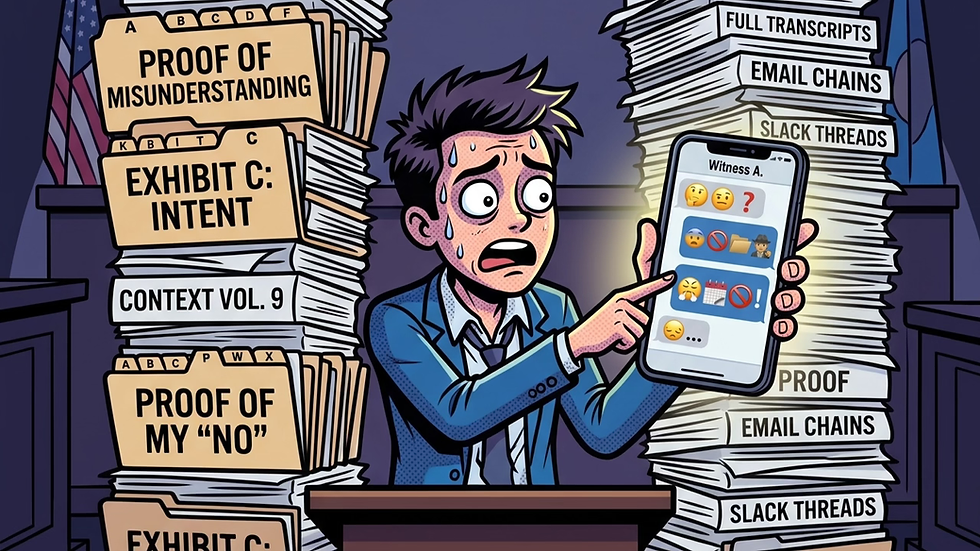
18:33 | Creating Proof of Danger
22:36 | Brain Values Confirmation Over Accuracy
25:38 | Self-Honesty and Self-Love
29:26 | Rewiring Safety and Trust
33:28 | Challenge of Self-Love and Vulnerability
35:35 | Final Thoughts and Disclaimers
Emotional Damage
Emotional damage functions as a highly organized, protective adaptation designed to predict and manage interpersonal threat. When childhood environments are characterized by unpredictability, emotional neglect, or inconsistent attachment, the nervous system adapts by prioritizing familiarity over health. To the primitive brain, familiarity is synonymous with safety. Consequently, individuals unconsciously replicate the relational instability they dread, keeping others at a distance to avoid pain and inadvertently confirming their deepest fears when connections fail.
Neurobiology of Defensive Distancing
Chronic relational trauma alters baseline threat-detection thresholds in the brain, rendering the amygdala hyperactive. The nervous system continuously scans for cues of rejection before they materialize, actively misinterpreting neutral stimuli as imminent abandonment. This chronic state of vigilance forces the body to protect itself through emotional distance, creating a physiological barrier to connection. Because the brain seeks confirmation over clinical accuracy, it unconsciously steers behaviors toward outcomes that reinforce original trauma blueprints.
Relational Sabotage
This protective stance often manifests as unspoken tests created to evaluate a partner's commitment. By withdrawing emotionally, ignoring communications, or manufacturing artificial conflicts, individuals construct hoops for others to jump through as proof of safety. Because these expectations are unvocalized, partners fail to navigate them, which the traumatized brain interprets as definitive proof of danger. Healing requires recognizing that secure connection is built on clear communication rather than silent diagnostic assessments.
Key Topics
Hypervigilance, Relational Sabotage, Attachment Injury, Confirmation Bias, Emotional Regulation, Somatic Safety