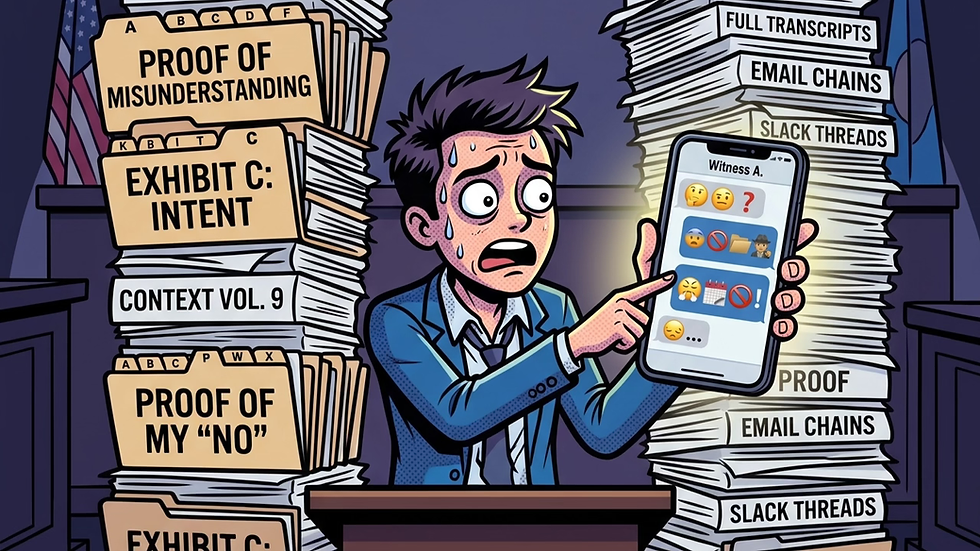
Therapeutic Alliance: Is Therapy Safe?

Updated: Apr 19

Therapeutic alliance cannot be forced through court orders or family pressure because vulnerability is a survival choice, not a requirement. Many individuals learn to perform compliance just to survive the session when they feel judged or unsafe. True clinical safety starts with honesty about the power dynamics at play in every room.
"Safety is not a license on the wall; it is a relationship that survives the truth."
Episode Chapters
00:00 | Power Dynamics and Therapy Safety
02:35 | Building Trust with Mandated Clients
08:12 | Subtle Forms of Bad Therapy
24:48 | Bias and Unmanaged Reactions
43:31 | Adapting Models to Cultural Contexts
49:31 | Safety, Curiosity, and Self-Advocacy
Therapeutic Alliance
Therapeutic alliance is the only factor that consistently predicts positive outcomes, yet it is often the first thing sacrificed for systemic efficiency or clinician ego. In many settings, therapy is not automatically safe just because a license is on the wall; it is a human interaction prone to bias, unmanaged countertransference, and power imbalances. For mandated or justice-involved clients, the room can feel like a tool for surveillance rather than a place of healing. A genuine alliance requires the therapist to acknowledge their authority and remain curious rather than defensive when challenged. Ultimately, clinical safety is built on a relationship where a client is allowed to advocate for themselves without being penalized for their survival adaptations.
Power Dynamics in the Clinical Room
Therapy has a built-in power dynamic where one person reveals their most vulnerable secrets while the other holds the authority to influence records and diagnoses. This imbalance is exponentially larger when treatment is mandated by courts, employers, or families. In these cases, the clinician often becomes a part of the system of compliance rather than a partner in growth.
Identifying Subtle Forms of Bad Therapy
Bad therapy isn't always a dramatic ethical breach; it is usually found in the subtle invalidation of a client's experience or the rigid application of models that ignore cultural context. When a therapist talks more than they listen or becomes defensive when a client expresses distrust, the alliance is broken. A healthy clinician remains curious and collaborative, prioritizing the client's autonomy over the "fixing" process.
Key Topics
Therapeutic Alliance, Power Dynamics, Clinical Ethics, Mandated Therapy, Therapist Bias