Relationships: Trauma Bonding

Updated: Jun 3

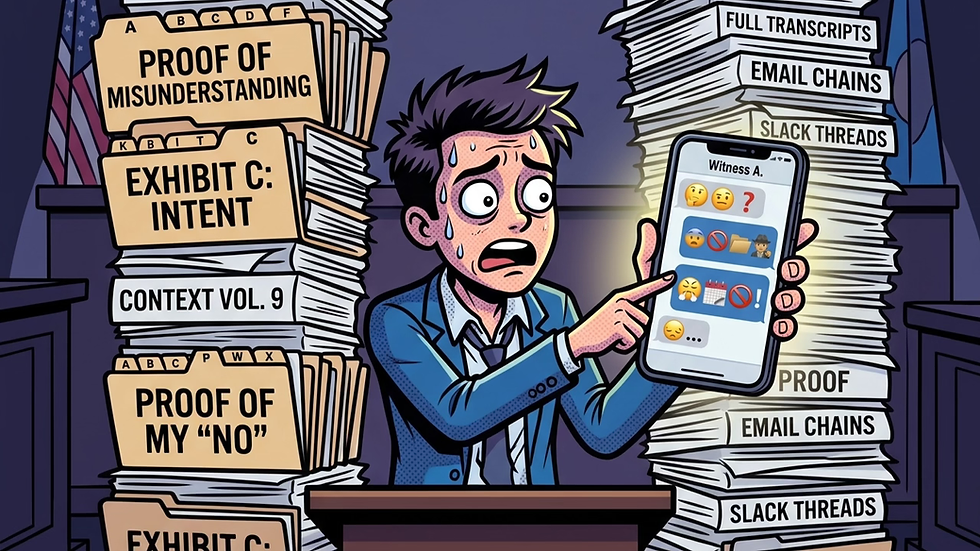
Trauma bonding tricks the brain into mistaking high-stakes emotional whiplash for deep romantic connection. We confuse the panic of inconsistent communication and constant fighting with passion. Your nervous system is simply repeating a pattern where love and fear were learned together. Healing begins when you finally realize that secure, quiet safety is not a threat.
"If you need a seatbelt just to get through a Tuesday evening, you aren't in a relationship—you’re riding someone else’s emotional roller coaster disaster."
Episode Chapters
00:00 | Unpacking Chaos and Healthy Love
01:12 | Treating Chaos as Normal
05:06 | How Environments Shape Attachment
10:07 | Intensity vs. True Intimacy
12:56 | Dopamine and Intermittent Rewards
16:24 | Oxytocin and the Withdrawal Loop
20:36 | Identifying True Feelings
26:37 | Retraining the Nervous System
31:37 | Why Healthy Love Feels Boring
36:14 | Choosing Consistency Over Intensity
43:03 | Ending the Narrative: Choosing Peace
Trauma Bonding
Trauma bonding is clinically defined as a complex neurochemical and physiological attachment designed for survival, not connection. When individuals develop in highly unpredictable environments, the threat-detection center of the brain (the amygdala) is conditioned to associate chronic activation with love. This patterns the autonomic nervous system to mistake the absence of high-intensity stress for emotional abandonment, leading to the repetition of destructive relational cycles.
Physiology of Co-Regulation
The human brain is natively configured for prediction and familiarity over happiness. In a trauma bond, intermittent reinforcement activates the exact same reward circuitry seen in gambling addictions, spiking dopamine, and cortisol. When a healthy, stable connection is introduced, the trauma-adapted body interprets calmness as a structural threat or flat boredom. Clinical integration involves cognitive and somatic training to teach the nervous system that safety is not a red flag.
Patterning Cycle
Repetitive patterns of toxic relationships are not personal failures of character, but hardwired survival strategies. The nervous system stores historical threats and physically reacts long before the prefrontal cortex can logically analyze the situation. Healing requires slow, deliberate co-regulation practices with an objective professional to separate active somatic anxiety from romantic intuition.
Key Topics
Trauma Bonding, Intermittent Reinforcement, Co-Regulation, Amygdala Threat Memory, Nervous System Conditioning, Intimacy vs. Intensity